How Two Identical Twins Ended Up with Different Biological Ages: The Story of The Turner Twins


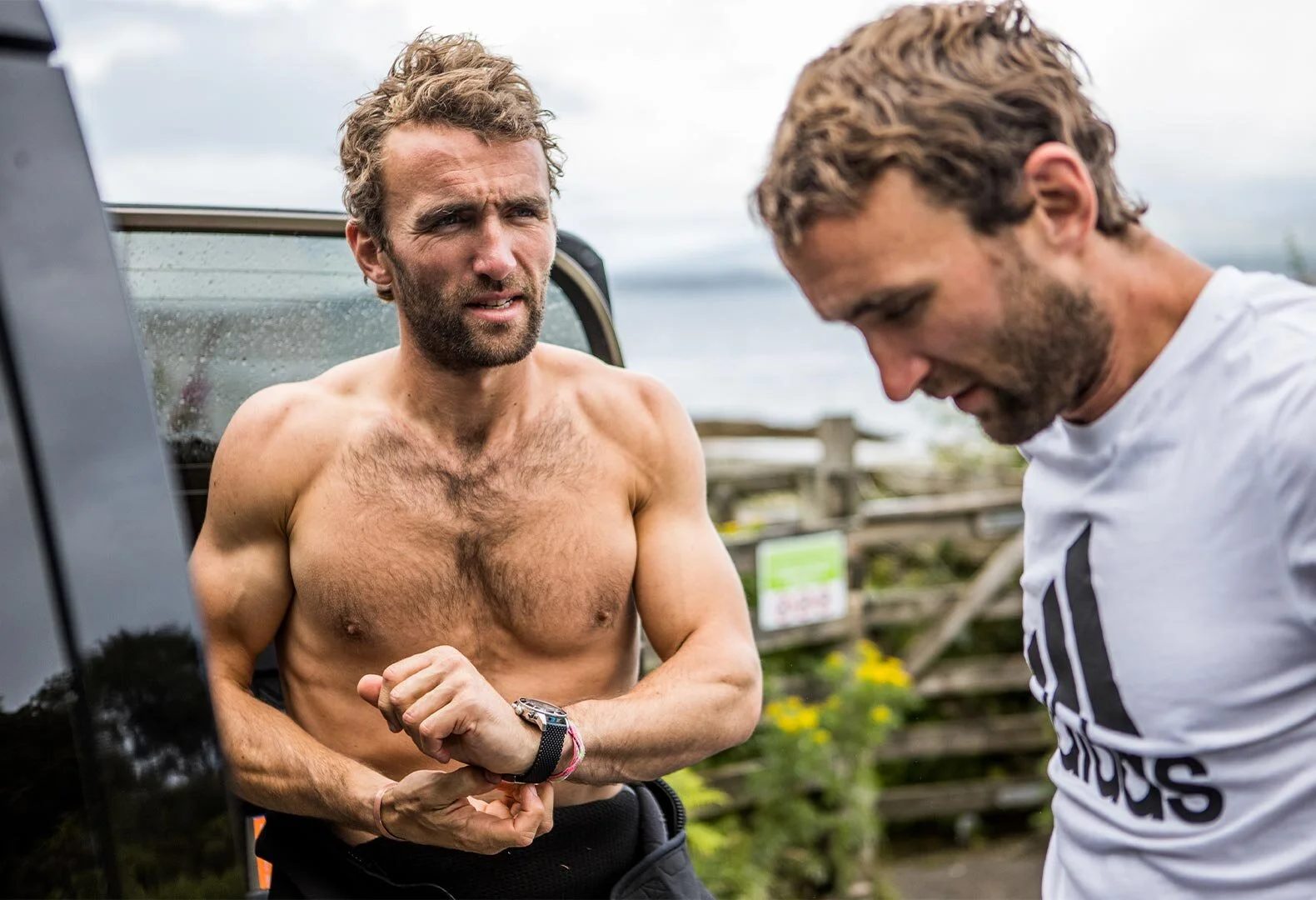
Hugo and Ross Turner are identical twins, sharing the same DNA and similar lifestyles. However, when they tested their biological age, they had two very different results.

You've rowed the Atlantic, set a couple of world records, and tested all kinds of diets and interventions. How did GlycanAge come into this, and what made you consider it?
Ross: As a brand, we've always tried to discover something new about the world through science, technology, and adventure, and this sits on the science and technology side of that. When we're not on expeditions, we usually run 12-week experiments to see what we can learn about fitness, diets, and whatever current ideas are making the rounds. Because I think when people read that you should do 12 reps times three sets, they assume that works for everyone, but it doesn't.
We like to question that. New technologies are always coming out, and medical devices and products are becoming far more mainstream, and this is where GlycanAge came in. We were looking at what's on the horizon, and GlycanAge came up as a biological marker you can do at home, send off, and get the results. For us, that was really interesting because we could compare our biological age before and after a 12-week study and see what the influence of certain controls would be.
Had you run experiments on yourselves before, or was GlycanAge the first time you approached your own biology this way?
Hugo: Yeah, we've done quite a few. Correct me if I'm wrong, Ross, but we've done about half a dozen medical and fitness challenges over the years. We've looked at things like meat versus a vegan diet. They're always three months long, short enough to get some initial data but not long enough to start impacting our other projects. The vegan versus meat one was a really insightful one, looking at the pros and cons of both. We've also done 40-minute versus 20-minute workouts, trying to answer the question: if you double your workouts, will you get twice the performance?
We've looked at high-fat versus high-carb diets and body weight versus gym weights. During lockdown, when people didn't have access to a gym, we looked at whether body weight exercises, press-ups, sit-ups, pull-ups, that type of thing, could match the performance gains of gym weights. There are probably one or two more, but in short, we've done a lot of experiments. Some of those studies also translate onto our expeditions. More recently, we were climbing a mountain in Nepal at the end of 2025, looking at how blood glucose was changing between us throughout the climb, at cognition levels, oxygen sats, all sorts of medical insights that translate really well on expeditions.

This is beyond impressive. Going back to your first GlycanAge experience: Hugo, you came back at 27, and Ross, you came back at 33. Same chronological age, same DNA, six years apart. Ross, what was your reaction?
Ross: Interesting, to be honest. Our first question was: why? There's so much to be said about nature versus nurture. Is it a lifestyle choice? Is it a diet choice? Is it the amount of exercise, or just general day-to-day living that's slightly different? If it's 1% different over 10 years, that adds up to quite a big difference. We didn't have a definitive answer, but that's exactly the point.
For us, GlycanAge was just a really good baseline to start the study. We've always said to our audience that it's just the two of us. It's not a wide-ranging study with peer review and top medical insights. It's just the two of us trying to find a little bit of twin insight, looking at what the differences are between us.
Sometimes the initial reaction from our customers is a bit of shock or a bit of skepticism. When the results came back, did you immediately have explanations for the difference, or was it more of an "I'm not sure that's true" moment, given that you do follow quite similar lifestyles?
Hugo: With new technologies, you're always going to have skepticism. But equally, it's an area we would never have otherwise looked into or thought about. The testing is the same for both of us, the methodology is identical, so any differences in the results are real. You might think twins should come out the same, but actually, we're not all the same, and that's the unique insight you get from doing these studies.
You tested right before and after a fasting challenge. At the end of the challenge, Hugo, you lost 4 kilos, and Ross, you gained 3. Both of your GlycanAge scores improved, but there was a clear difference in weight. Did that surprise you?
Ross Turner: Good question. We were probably expecting Hugo, who was fasting, to lose a little bit of weight, just because when you add in a new diet regime, it can take a few weeks, if not a month, to adjust to eating the right calories at the right time. But looking back now that we've finished the study, the takeaway is that it's not the amount of calories you eat, it's the time you consume them. I think it was a big learning curve that with exercise and a good diet, or a better diet, you can reduce your biological age. But at the same time, Hugo lost 4 kilos whereas I gained 3 kilos, so I think adding muscle mass is just as beneficial as fasting in terms of reducing your biological age.

Since you were both exercising and consuming the same amount of calories, do you think fasting was what made the most impact, or was it the exercise?
Hugo: I think it's probably a combination. It would be very unlikely to be just one or the other.
Ross: I think there are definitely benefits to both. If you're looking to lose weight, fasting can still get you that body weight loss and still improve your biological age. On the other hand, if you want to put on some muscle mass and get fitter and stronger, then more exercise and strength training will increase your performance but also reduce your biological age. I think the common theme between the two is exercise. I think if you exercise a lot, a little, or even if you just want to reduce your biological age, just half an hour a day, even just walking, will definitely have an impact on that. Then, as you increase your exercise, that's probably going to have an increase in lowering your biological age.
If you want to dive deeper into the benefits of exercising for longevity, this article is worth a read.

You're currently running a study on cholesterol, with Ross taking statins and Hugo trying to lower it through diet. What made that the right experiment to take on, and how is it going?
Ross: We decided to do the cholesterol study because when we finished the project in the Himalayas last year, a lot of the blood results we got through Medichecks highlighted that we both had high cholesterol. It does a full blood profile, lipids, red and white cells, and so on, and cholesterol was one of the only things that flagged as red, as something that needs improving. We're obviously all aware that cholesterol is not good for your heart health and overall health, so we thought, let's try to reduce it. How can we fit this into a 12-week program that compares two different ways of doing it? Statins are obviously a well-understood and medically researched way of reducing cholesterol, but there is also diet, and there have been numerous studies on that. What we want to show is what the actual difference is when it comes to twins and cholesterol. We know statins are more than likely going to come out on top, but what is the effect of that? We believe food can only reduce your cholesterol levels by up to about 15%.
We're not expecting a huge drop for Hugo on just diet, but for my cholesterol over 12 weeks, I'm expecting to possibly halve it, which will be really interesting. In about 8 weeks, we're going to do our bloods again and see the difference. The controls are the same, we're exercising very similarly, but we have somewhat different diets.
Hugo: The difference in our diets is that I've cut out all dairy, and I'm trying to avoid all saturated fats. My focus foods are red berries, nuts, whole grains, tomatoes, avocado, getting all the good unsaturated fats, and avoiding the saturated fats. Or trying to, at least. Last night I might have broken the rules. But again, I hope that's a bit more relatable for people who might follow it and think, I don't have enough discipline to go cold turkey, pardon the pun, and cut out cheese and fats and things like that.
I'm feeling much better on it, oddly. I'm enjoying it. But it definitely makes you think about the foods you eat, especially the snacks. It's good to just educate yourself on what might be a short-term as well as a long-term solution to reduce cholesterol.
For our readers who are interested in longevity or lowering their biological age, is there something from everything you've tested that you think applies to anyone?
Ross: I think exercise is the main one. If you don't like exercise or you've never exercised, just go and do 10 minutes a day for a week. If you can, then add 15 minutes every day; it's not a big increase in time, but overall you're going to see the benefits. When you start doing things, you don't realize you're doing 10,000 steps, and you're happy. Exercise can make a massive difference to whatever you're doing.
Hugo: Adding to that: eat the rainbow. If you want a greasy burger, have a greasy burger. But try to build a habit around variety, eating all manner of foods. Variety is key.
What are your thoughts on some of the health myths out there? Is there something you've tested yourselves that you've found isn't as useful or as good as people make it out to be?
Ross: When we did vegan versus meat during COVID, it was a very interesting topic because people were talking about animals, diseases, and so on. I think when people say being vegan is healthy or healthier, the reality, from what we found, is that it's not as healthy at all. And again, it's just the two of us. This isn't peer-reviewed, but through our blood, our gut, and our general health study, that's what we found. Yes, a vegan diet definitely improves certain areas of health, but it's very detrimental to others. So it's a tradeoff. That's why Hugo said to eat the rainbow. Just be conscious of what you're eating and eat as many high-quality foods as you can. Avoid some foods, eat more of others, but have that nice profile. I think if you start going down the vegan route, which some people are very passionate about, and that's absolutely fine, it really is quite detrimental to some areas of health that are very important.
Finally, what's next? Can you give us a sneak peek at the next experiment?
Ross: In spring and summer, we're going to be looking at longevity supplements and biological age. There are some really scientifically and clinically proven products coming out right now that we want to put at the heart of our next 12-week study, to understand whether supplements, bars, pills, potions can have a better impact than just regular exercise and diet. Every three months, there's something new in the media, a new health trend, a new product, a new exercise regimen that's supposedly the next best thing. We like to keep our studies current with what people are seeing and doing, because after 12 weeks, they can go, "yes, this is what I've been reading about," and hopefully learn something.
Start your own GlycanAge journey
Like the stories you read? Begin with GlycanAge for personal use and longitudinal testing, read biological age testing explained, then choose a GlycanAge plan when you are ready.

The Future of Healthcare is Preventative, Personalised, and Powered by Glycans
Whether you’re improving your own health, supporting patients, or driving research, GlycanAge helps you turn science into action.


From 45 to 29: How Stress and Lifestyle Changed One Entrepreneur’s Biological Age
After a decade helping build Viber, entrepreneur and angel investor Atanas Raykov entered one of the most demanding periods of his life. A major career transition, intense family caregiving and disrupted routines coincided with his GlycanAge rising from 35 to 45. Six months later, it had fallen to 32, and his latest result came back at 29 - a 16-year change in measured biological age over roughly one chronological year.
Published:September 27, 2026
 Reading time:
15 minutes

Same Life, Different Biology: Bettina and Roberto Campolucci Bordi on Food, Stress and Growing Healthier Together
Bettina and Roberto Campolucci Bordi have shared more than 20 years of life and many of the same habits. Yet their GlycanAge results were different, showing how two people can live closely together while their biology still responds in its own way.
Published:August 20, 2026
Reading time:15 minutes